product — the mechanism, in depth
Voice infrastructure that behaves like software.
VoipFlow is multi-tenant cloud infrastructure orchestration software. Four mechanisms do almost all of the work — tenant partitions, zero-touch certificates, port 5062, and an edge close to your users.
mechanism 1
Tenant partitions
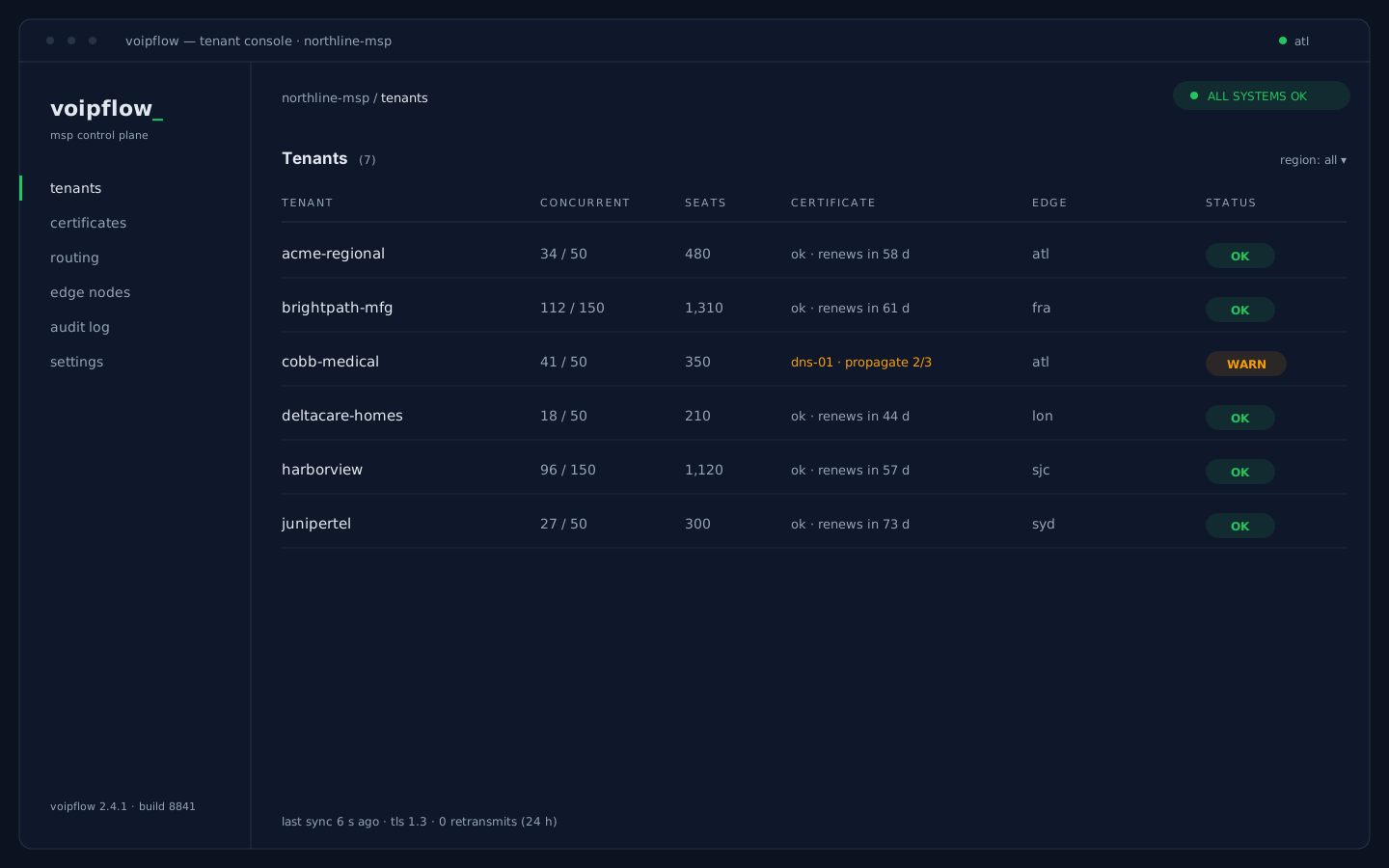
Every client of yours is an isolated tenant partition — configuration, certificates, ACLs, and dashboards — unlimited partitions on every plan. Your L2 technicians are productive in about 15 minutes; there is no SIP-specialist dependency.
Portal, invoices, and dashboards carry your brand. Your client never learns our name.
mechanism 2
Zero-touch certificates
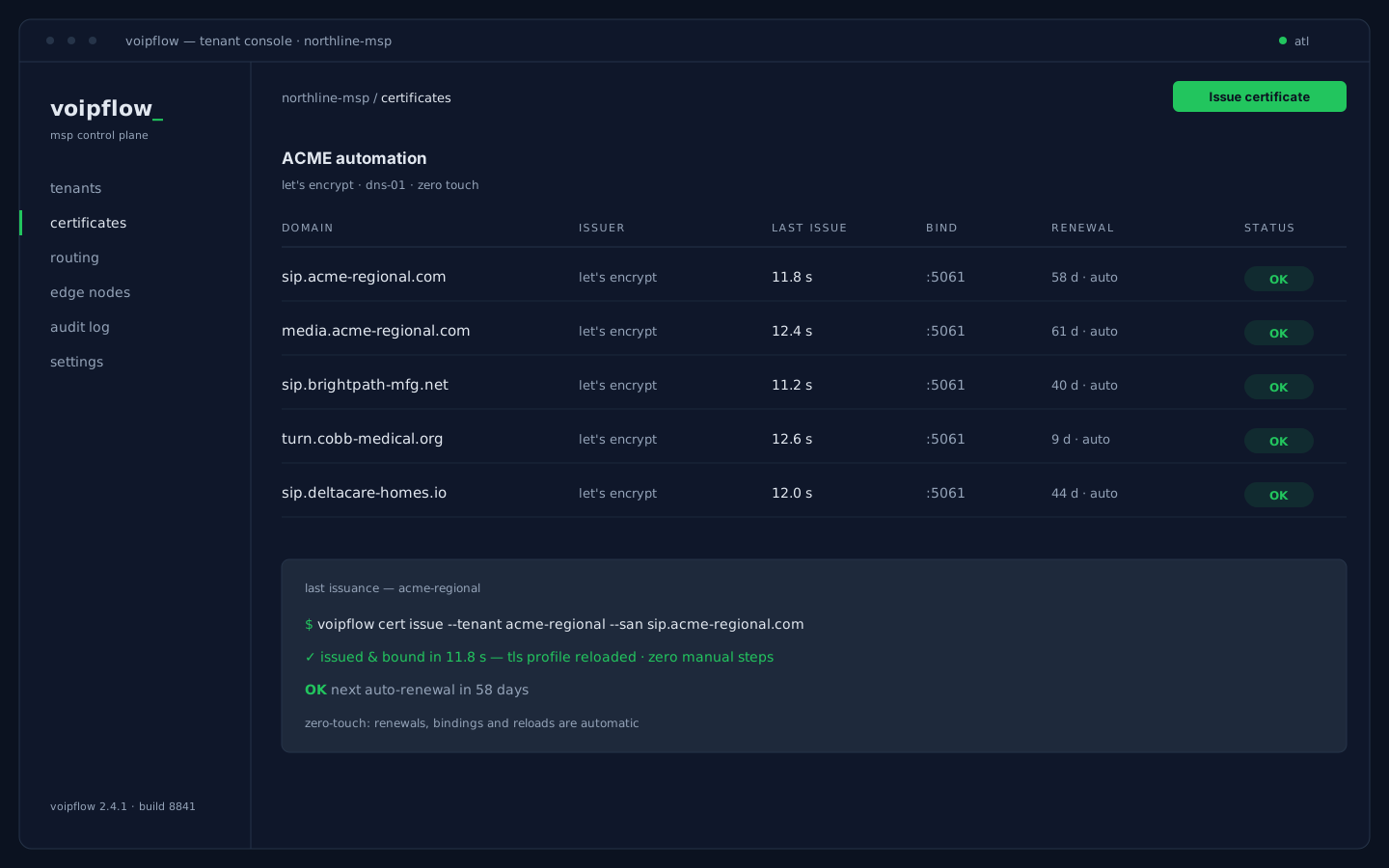
Let's Encrypt wildcard certificates issue, renew, and bind themselves natively — no scripts, no calendar reminders, no CLI babysitting. Issue-to-bind takes about 12 seconds, per tenant, across all tenant SIP domains.
The 90-day renewal trap is a process problem, so the fix is a process: the certificate lifecycle is closed inside the orchestration layer.
mechanism 3
Port 5062: the SIP ALG bypass
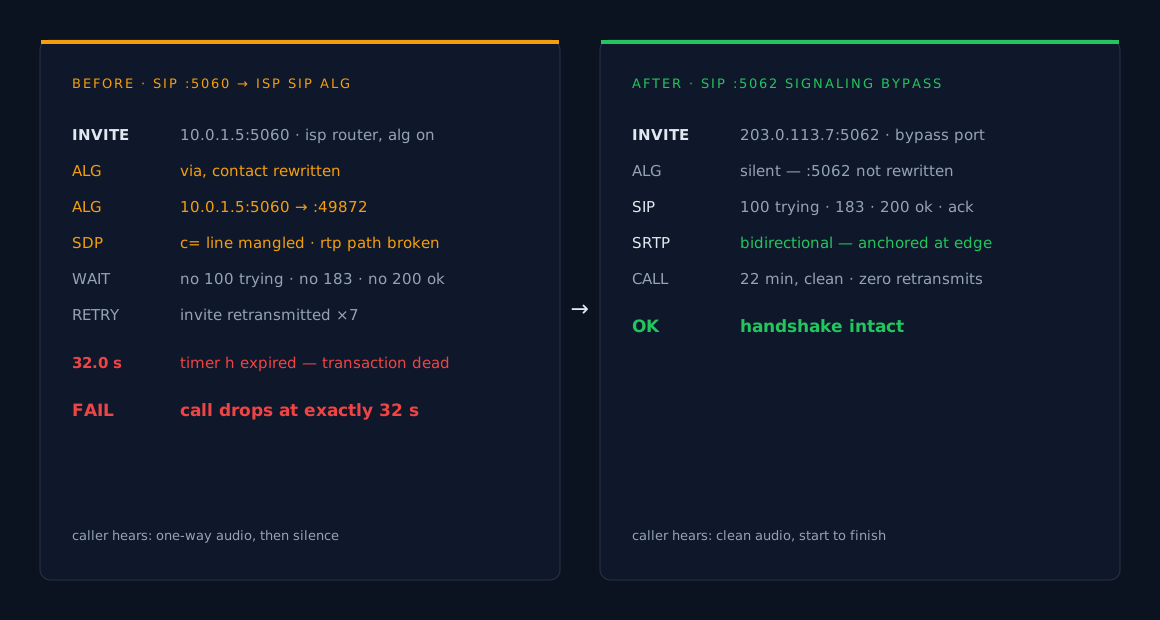
Residential routers ship with stateful SIP ALG inspection enabled on 5060/5061 — it rewrites Via and Contact headers and corrupts the ACK. Under RFC 3261, Timer H expires exactly 32 seconds (64×T1) after the 200 OK, the SBC sends BYE, and the call drops. Every time.
VoipFlow's signaling listens on port 5062. Residential ALG rewriting applies to 5060/5061, so the signaling passes untouched. It's not clever — it's the boring fix that works on every home router we've tested.
Media fallback: for the stubborn few, proxy-media is budgeted at 20% of traffic — stated plainly, because you plan capacity with real numbers.
the console your technicians get
Dark, sparse, calm. No CLI babysitting.
mechanism 4
Five edge nodes
Atlanta, Silicon Valley, Frankfurt, London, Sydney. Signaling lands close to the user; media stays short. Latency per region is on the dashboard, not in a slide deck.
Compliance and security, factually: TLS 1.2+ and SRTP everywhere, EU data pinning for EU-tenant workloads, IP ACLs and toll-fraud controls per tenant, Kari's Law notifications and RAY BAUM'S PIDF-LO pass-through supported — emergency call delivery stays with your carrier. Trust page.
see it on your own tenants
Deploy Free 14-Day Sandbox — No Credit Card Required14 days. No credit card. No sales follow-up unless you ask.